Đặc biệt | A | Ă | Â | B | C | D | Đ | E | Ê | F | G | H | I | J | K | L | M | N | O | Ô | Ơ | P | Q | R | S | T | U | Ư | V | W | X | Y | Z | TẤT CẢ
1 |
|---|
1L | |
2 |
|---|
A |
|---|
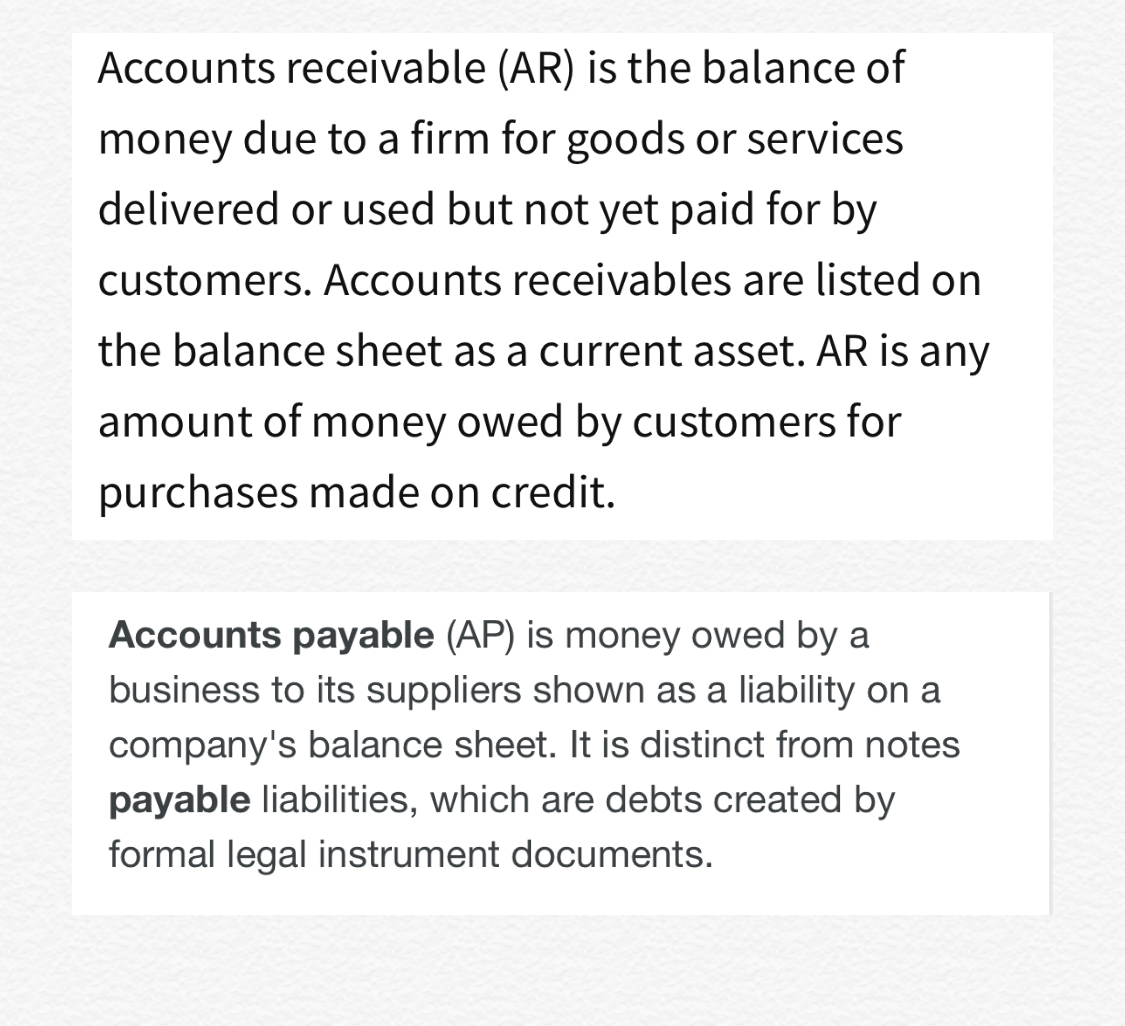
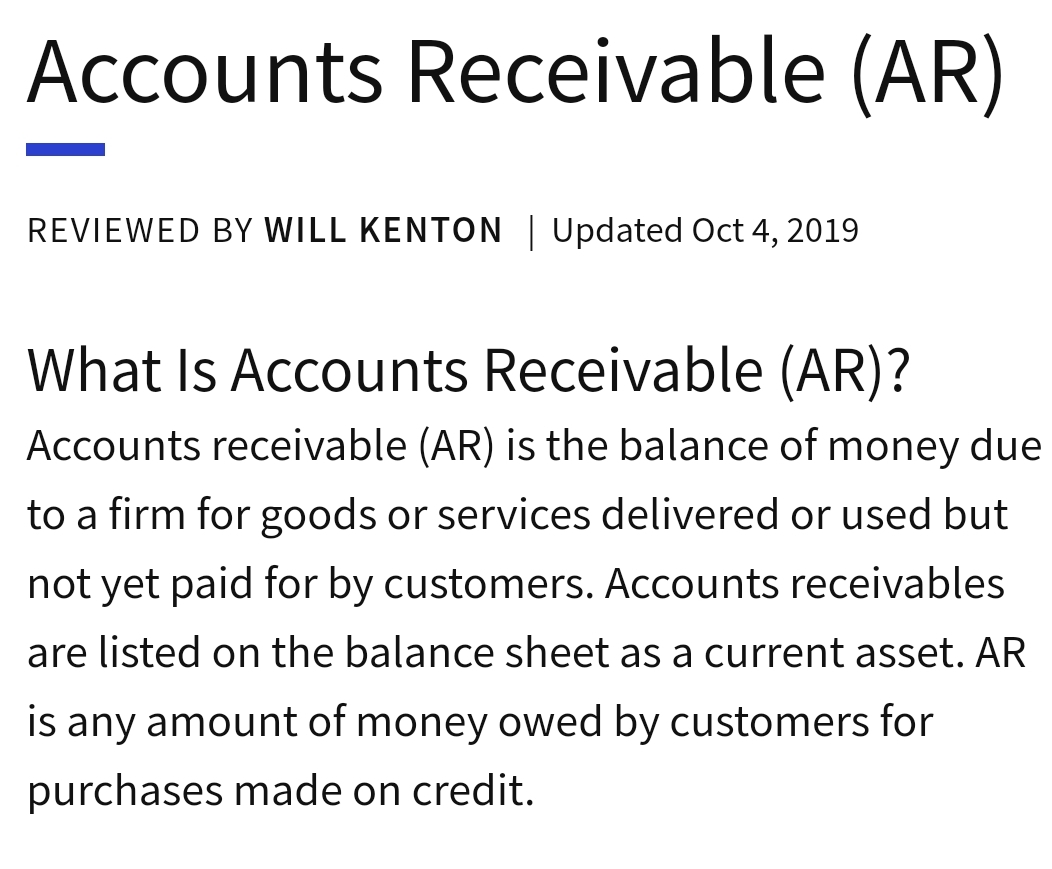
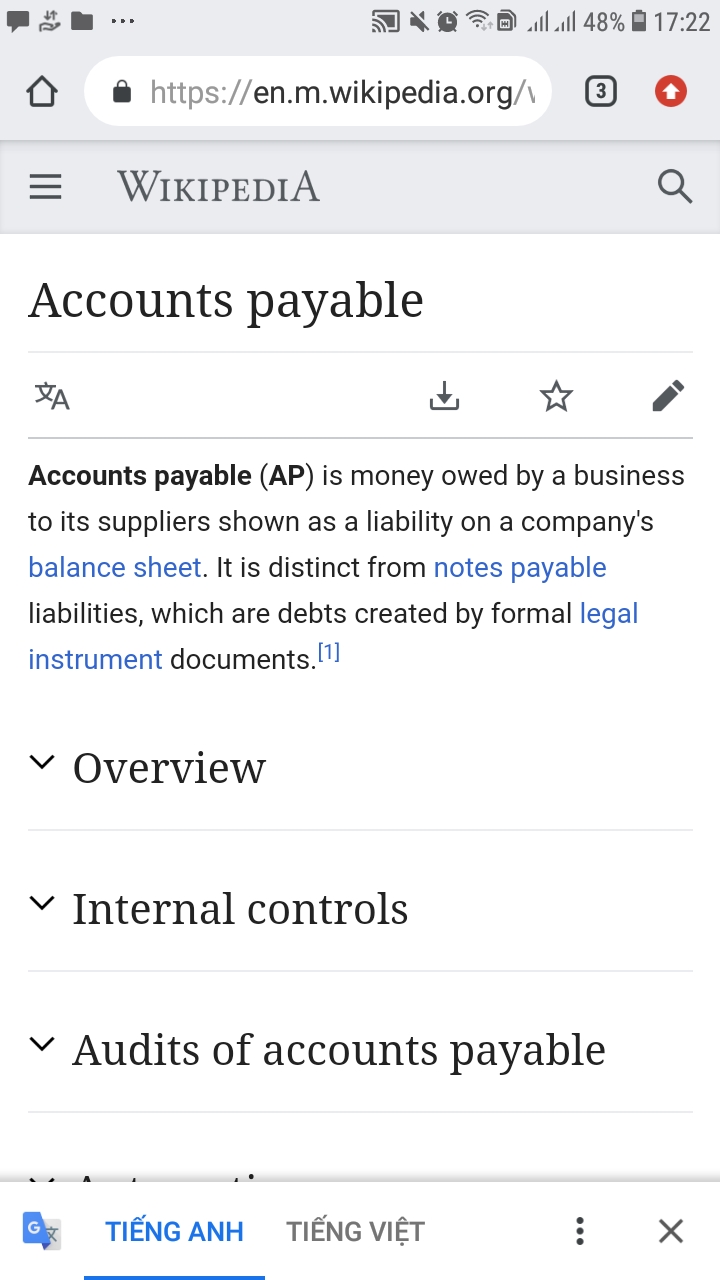
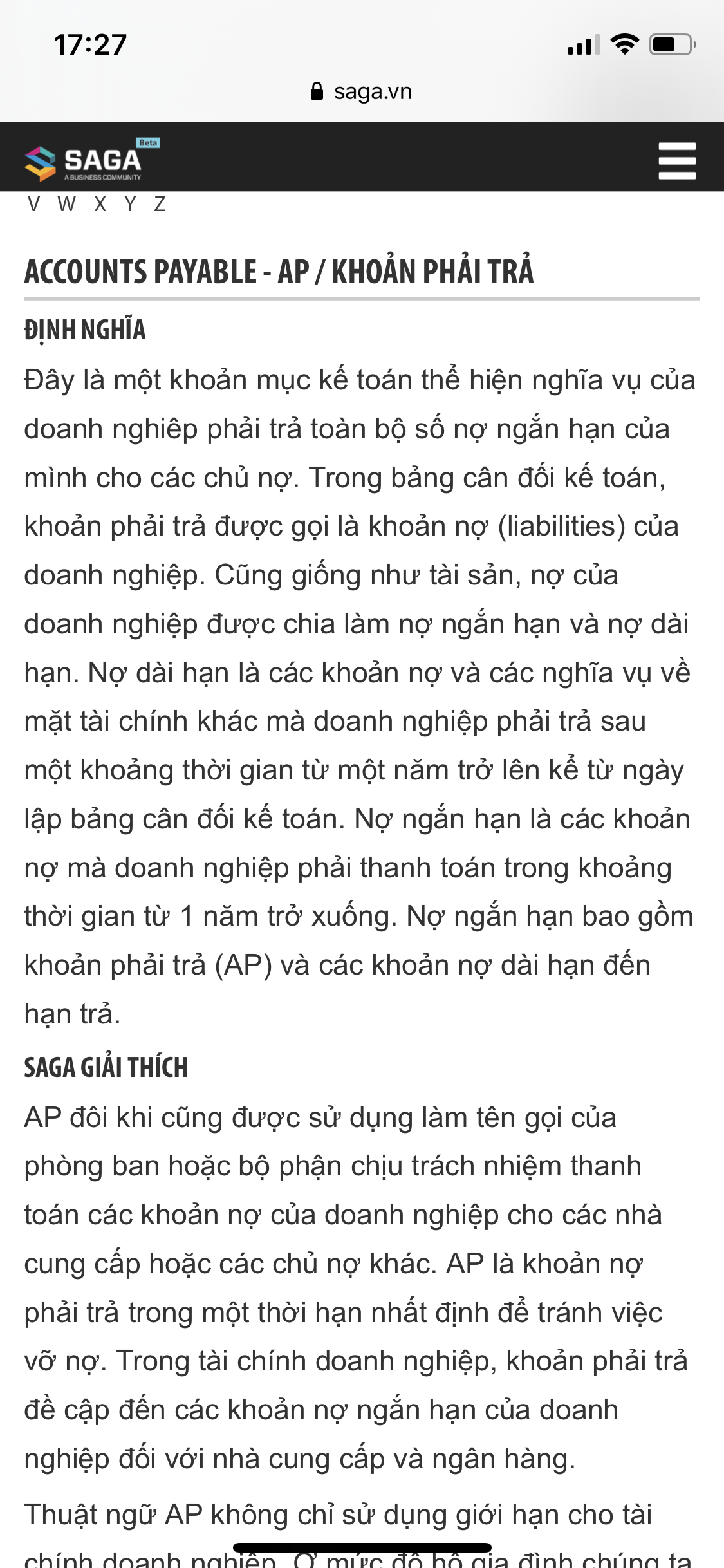
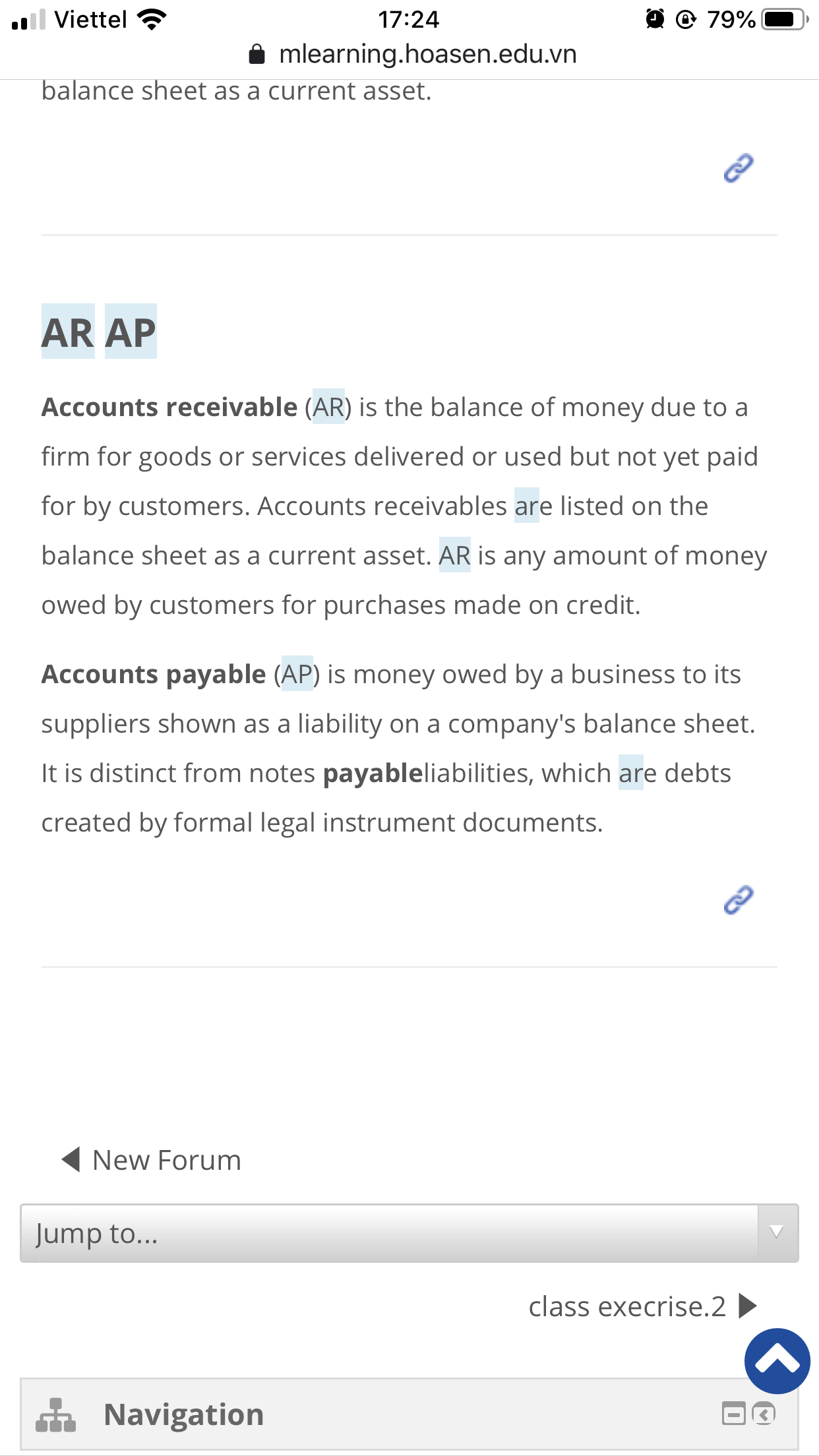
AR APAccounts receivable (AR) is the balance of money due to a firm for goods or services delivered or used but not yet paid for by customers. Accounts receivables are listed on the balance sheet as a current asset. AR is any amount of money owed by customers for purchases made on credit. Accounts payable (AP) is money owed by a business to its suppliers shown as a liability on a company's balance sheet. It is distinct from notes payableliabilities, which are debts created by formal legal instrument documents. | |
Acccount payble & account receivementAccounts receivable are legally enforceable claims for payment held by a business for goods supplied and/or services rendered that customers/clients have ordered but not paid for. These are generally in the form of invoices raised by a business and delivered to the customer for payment within an agreed time frame. Accounts receivable is shown in a balance sheet as an asset. It is one of a series of accounting transactions dealing with the billing of a customer for goods and services that the customer has ordered. These may be distinguished from notes receivable, which are debts created through formal legal instruments called promissory notes.[1] Accounts payable (AP) is money owed by a business to its suppliers shown as a liability on a company's balance sheet. It is distinct from notes payableliabilities, which are debts created by formal legal instrument documents.[1] | ||
Account
| |
Account Payable & Account ReceivableAccount Payable & Account Receivable | |
Account Payable & Account Recievable
| |
Account payable123 | |
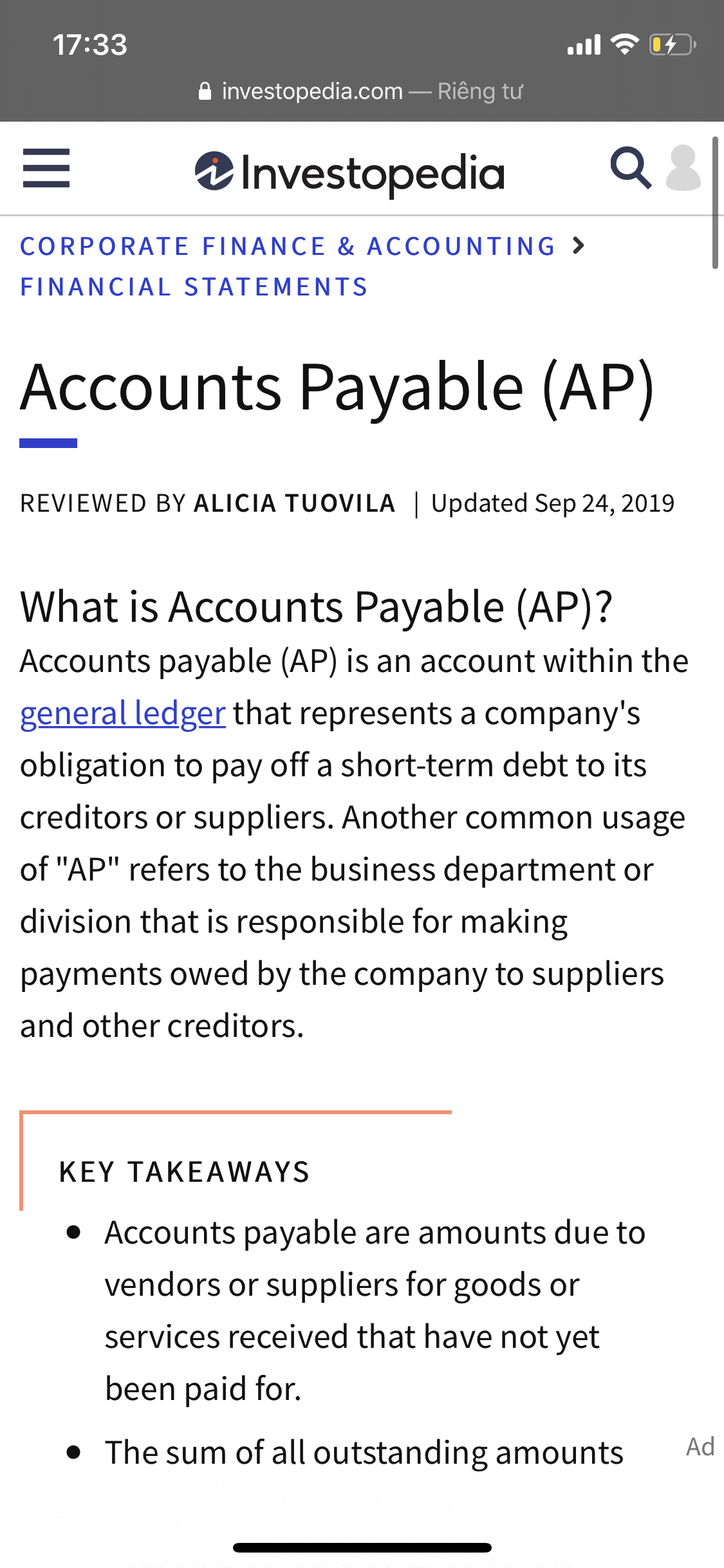
Account receivable and account payableAccounts receivable financing, also called factoring, is a method of selling receivables in order to obtain cash for company operations. Accounts receivable (A/R) are amounts owed by customers for goods and services a company has sold to those customers. Accounts payable (AP) is money owed by a business to its suppliers shown as a liability on a company's balance sheet. It is distinct from notes payable liabilities, which are debts created by formal legal instrument documents. | |
Accounts Payable & ReceivableAccounts Payable & Receivable | |