Special | A | B | C | D | E | F | G | H | I | J | K | L | M | N | O | P | Q | R | S | T | U | V | W | X | Y | Z | ALL
F |
|---|
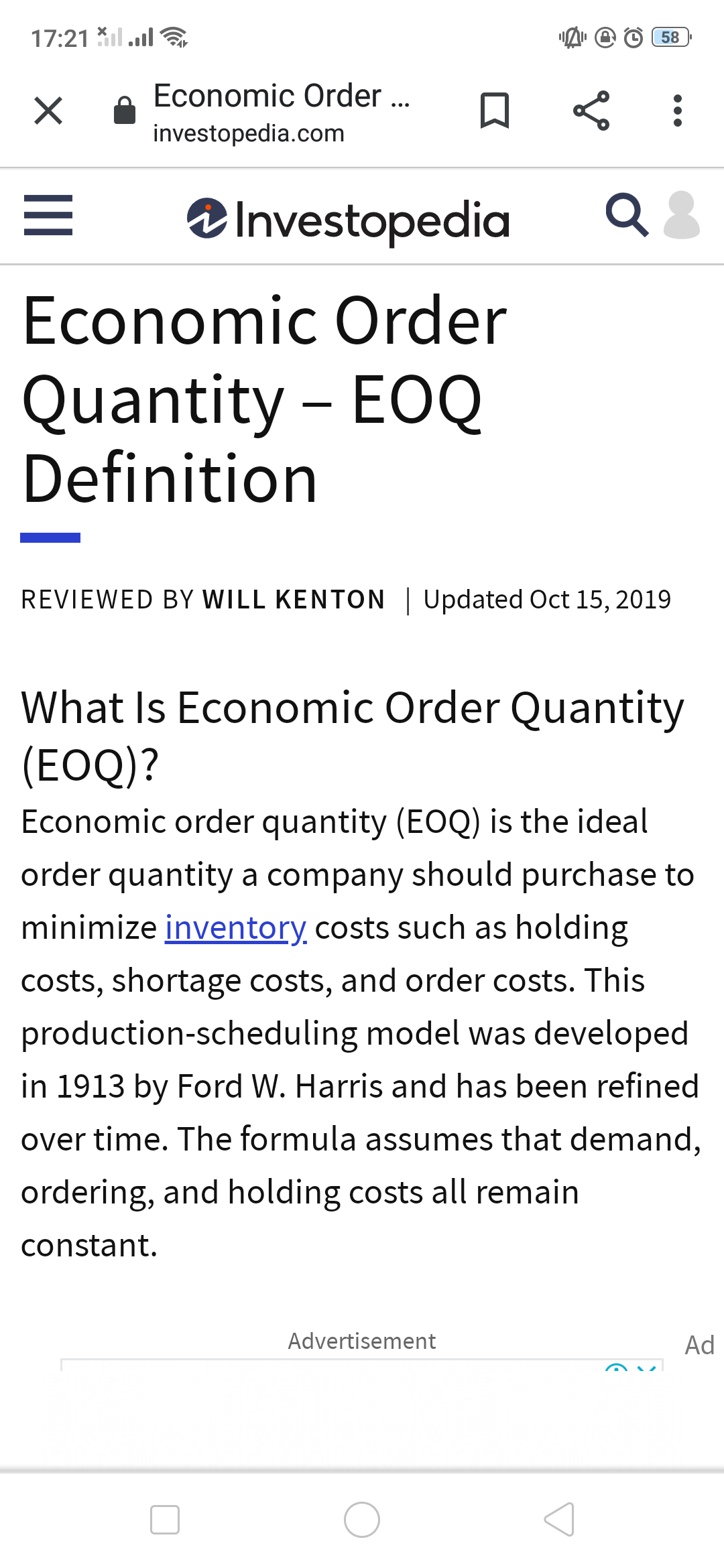
FLOAT - OEQFLOAT In economics, float is duplicate money present in the banking system during the time between a deposit being made in the recipient's account and the money being deducted from the sender's account. It can be used as investable asset, but makes up the smallest part of the money supply. Float affects the amount of currency available to trade and countries can manipulate the worth of their currency by restricting or expanding the amount of float available to trade. EOQ The Economic Order Quantity (EOQ) is the number of units that a company should add to inventory with each order to minimize the total costs of inventory—such as holding costs, order costs, and shortage costs. The EOQ is used as part of a continuous review inventory system in which the level of inventory is monitored at all times and a fixed quantity is ordered each time the inventory level reaches a specific reorder point. | |
Float - EOQFloat, EOQ | |

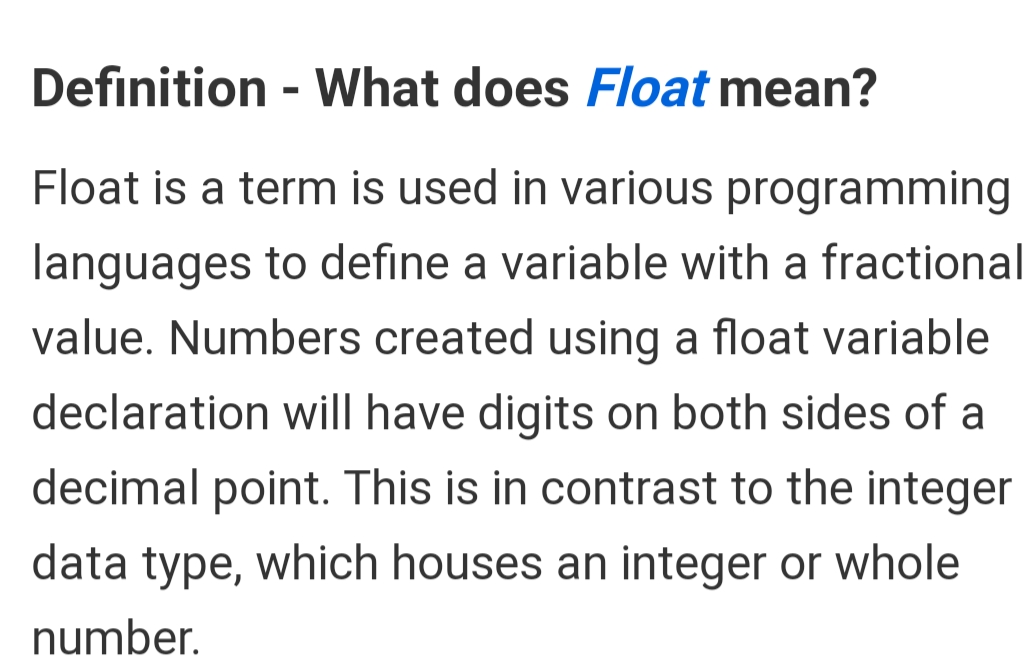
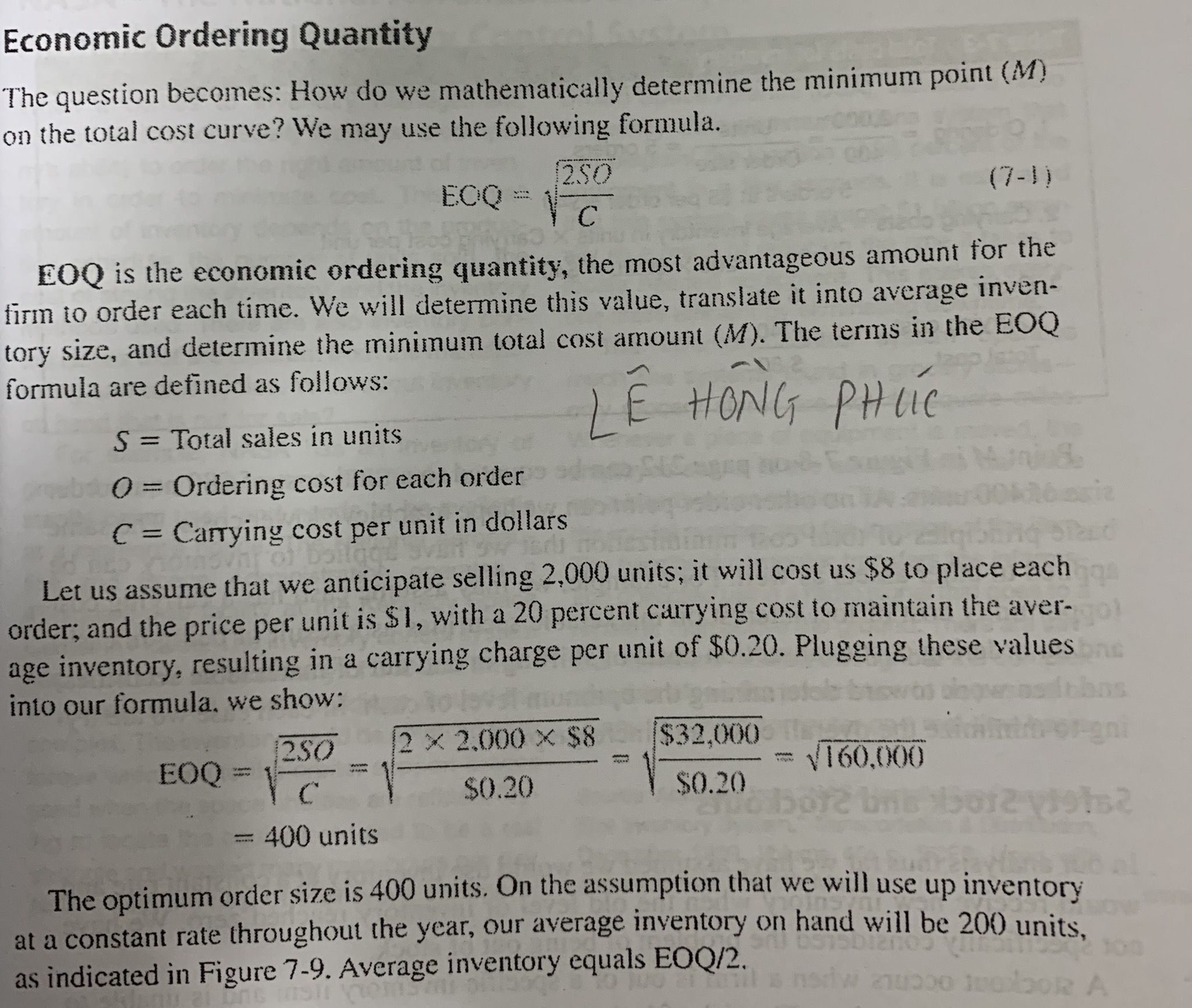
Float and EOQ modelThe float is the number of shares actually available for trading. Float is calculated by subtracting closely held shares -- owned by insiders, employees, the company's Employee Stock Ownership Plan or other major long-term shareholders -- from the total shares outstanding. The Economic Order Quantity (EOQ) is the number of units that a company should add to inventory with each order to minimize the total costs of inventory—such as holding costs, order costs, and shortage costs. ... The EOQ model finds the quantity that minimizes the sum of these costs. | |
Float and cash flow forecast- Definition of cash flow forecast A cash flow forecast is a plan that shows how much money a business expects to receive in, and pay out, over a given period of time. ... Check out our article on how to make a cash flow forecast for more information on the process and benefits of financial forecasting for small businesses. - The float is the number of shares actually available for trading. Float is calculated by subtracting closely held shares -- owned by insiders, employees, the company's Employee Stock Ownership Plan or other major long-term shareholders -- from the total shares outstanding. | |
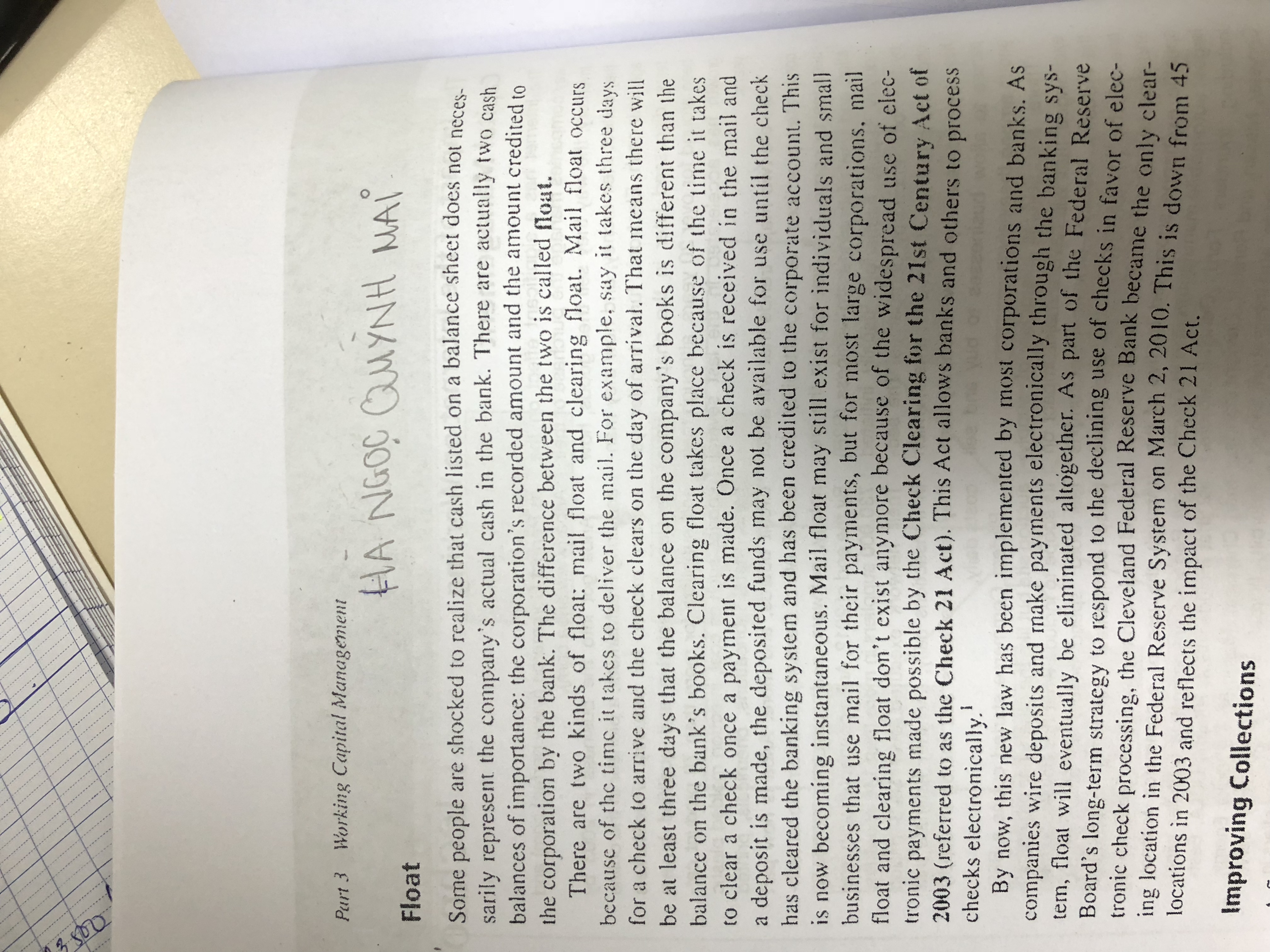
Float, Cash Flow ForecastsFloat(dang chuyen): Float is the difference between the corporation's recorded amount and the amount credited to the corporation by the bank. Float Aiailable balance Ledger halance (book balance) Tien dag chuyên =ton quỹ TK NH-Ton quỹ ke toán Checks written by a firm disbursement float generate Checks received by the firm create collection float Cash Flow Forecasts Cash flow fore casts show the expected receipts and payments during a forecast period and are a vital management control tool, especially during times of recession A simple pro-forma is given below: Sales volume Revenue Costs One-off mdses Typical format (the following slide) | |
Float, EOQ | |
Float, EOQ model.. | ||